Lec 21 · Directory 마무리·Shared cache·NUCA, Virtual Memory(base&bound·paging·TLB·virtual cache)
정밀 정리 · 검증 2026-09-24 06:47
1개요
1.1ca_L13 후반: directory protocol 의 block state 별 처리를 마치고, private vs shared LLC, NUCA(Skylake 예), shared cache 공간 분배 문제
1.2ca_L14 Virtual Memory: bare machine → base & bound(segment, carry-save adder) → external fragmentation → paging
1.3Atlas demand paging, page table 크기와 hierarchical page table(RISC-V Sv32), TLB 설계·reach·miss 처리(hardware/software)
1.4page fault handler·TLB shootdown, TLB latency 를 숨기는 virtual address cache(VIVT)의 aliasing 문제까지, VIPT 는 다음 강의
2섹션별 정리 상황·문제 → 원인 → 해결
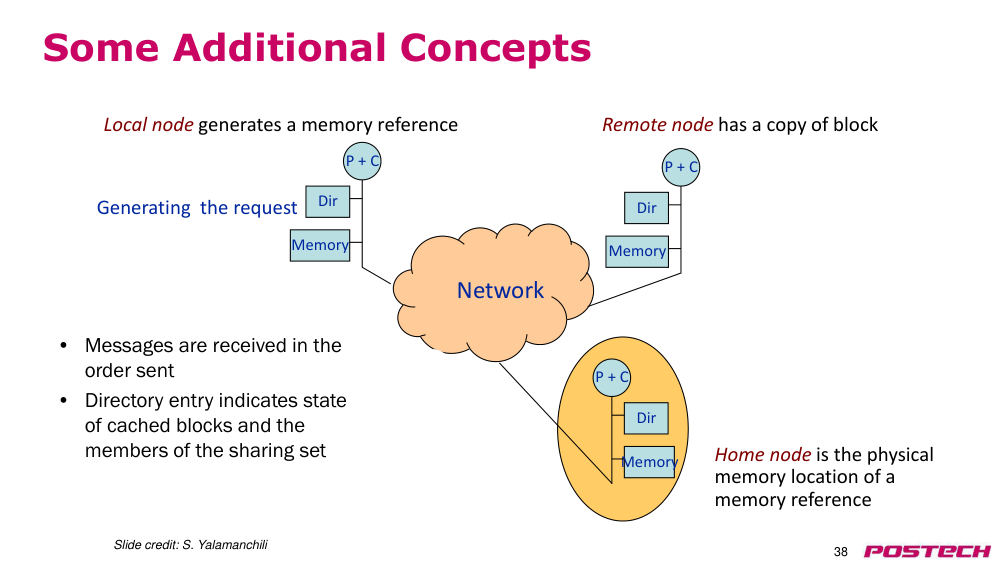
2.11:08–7:56Directory protocol 복습: node 역할과 block state 별 동작
상황·문제지난 강의에서 끝내지 못한 directory-based coherence 의 state 별 처리를 마무리
원인snoop 기반은 broadcast 때문에 scalability 가 없고, directory 는 home node 가 line 별 state·sharer 를 보관한다
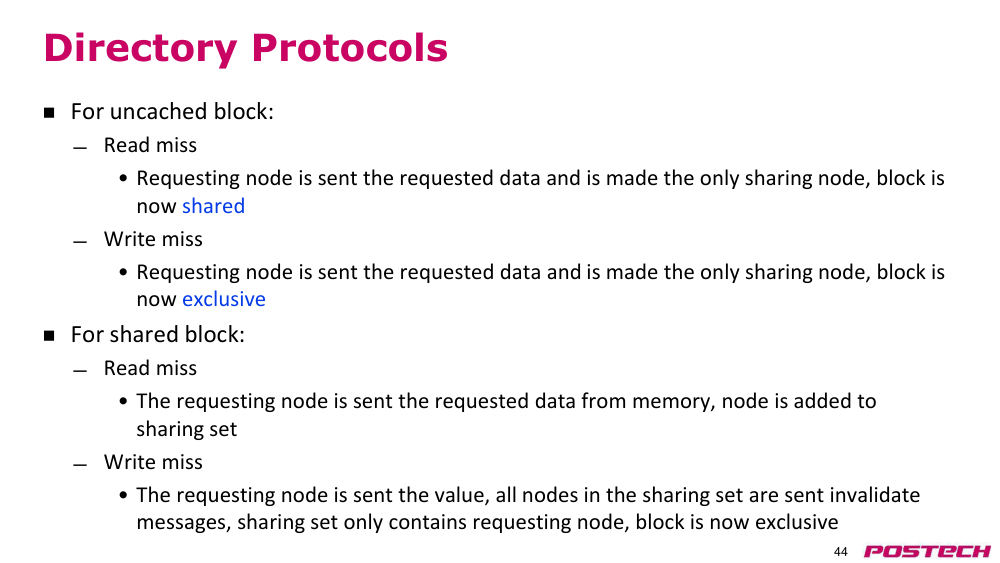
해결요청자는 home 의 directory 에 문의, directory controller 가 필요한 node 에만 message. uncached·shared·exclusive block 마다 read miss·write miss·write back 처리 규칙
- local(요청)·home(주소 담당 memory·directory)·remote(복사본 보유) node
- write miss to shared: sharer 모두 invalidate 가 끝난 뒤 요청자에게 응답
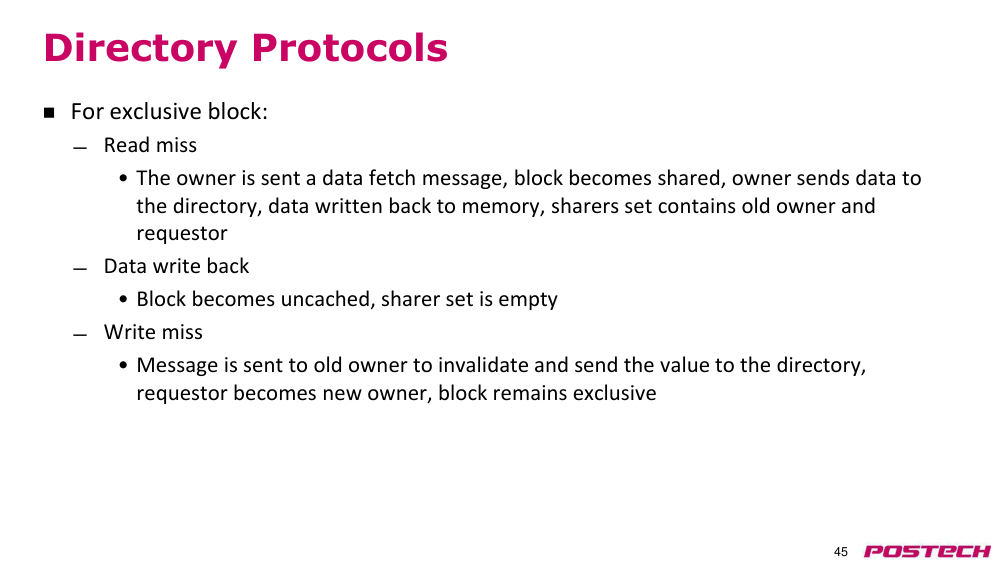
- exclusive block read miss: home 은 최신 data 가 없어 owner 에게 fetch, memory 에 write back, sharer 는 owner+요청자
- 여기서 exclusive 는 MSI 기준 modified 이며 MESI 의 E 가 아님 (강의)
2.1.r.1Wikipedia: Directory-based cache coherence ↗ · cache line 마다 processor 별 bit vector(sharer set)를 두는 directory 형식
2.27:56–12:16Private vs shared last-level cache
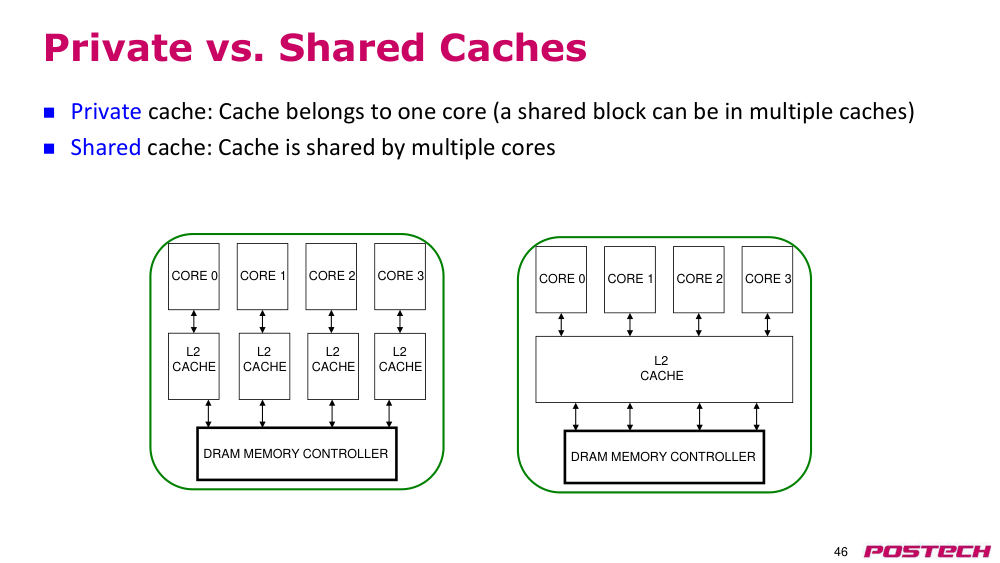
상황·문제CMP 에서 last-level cache(L2)를 core 별 private 로 둘지 shared 로 둘지
원인private 는 공유 data 가 여러 L2 에 중복되고, shared 는 core 간 contention·interference 와 긴 latency 가 생긴다
해결shared 는 중복이 없어 용량을 효율적으로 쓰므로 최근 Intel·AMD 는 LLC 를 공유. 대신 큰 cache 의 latency 문제가 남음
- private L2 는 coherence protocol 에 참여, interference 는 DRAM 에서만
- shared L2 는 다른 core 행동이 유효 용량에 영향
- memory hierarchy 원칙: 클수록 느리다
2.312:16–16:43NUCA: 큰 shared cache 의 non-uniform latency
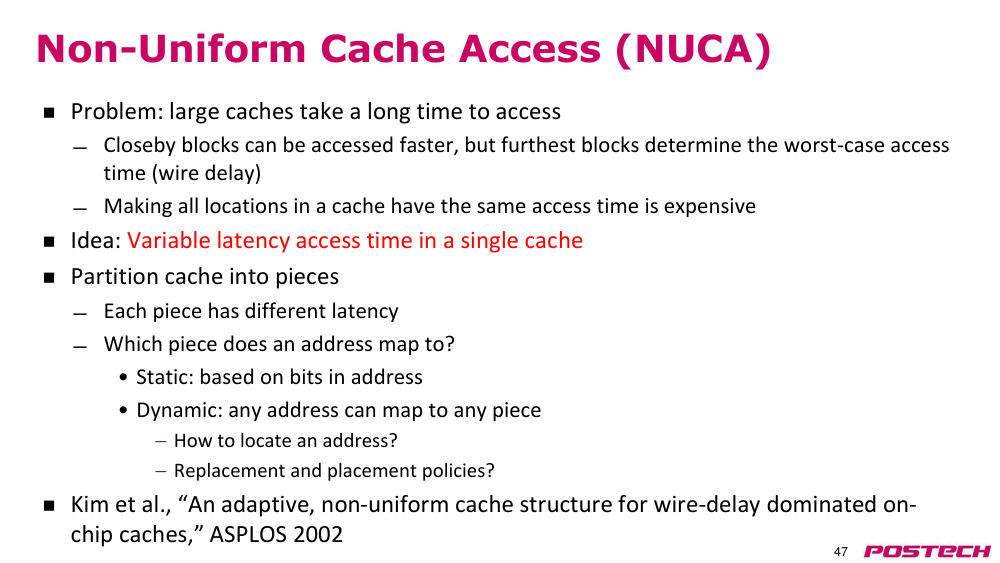
상황·문제하나의 큰 shared cache 는 가장 먼 block 이 worst-case latency 를 결정
원인wire delay 때문에 모든 위치를 같은 access time 으로 만드는 것은 비싸다
해결cache 를 bank 로 나눠 core 와의 거리에 따라 latency 를 다르게. mapping 은 static(interleaving) 또는 dynamic(core 가까이 배치, 성능↑ 대신 복잡)
- 논리적으로는 하나의 shared cache, 물리적으로는 독립 동작하는 조각
- dynamic: core 0 이 쓰는 data 를 가까운 bank 에, 넘치면 인접 bank 로
- Kim et al., ASPLOS 2002 참고
2.3.r.1Kim·Burger·Keckler, An Adaptive, Non-Uniform Cache Structure for Wire-Delay Dominated On-Chip Caches (ASPLOS 2002) ↗ · p47 에 인용된 NUCA 원 논문 (Utah 강의 사본, 1쪽 제목·학회 확인)
2.416:43–17:55NUCA 예: Intel Skylake LLC slice
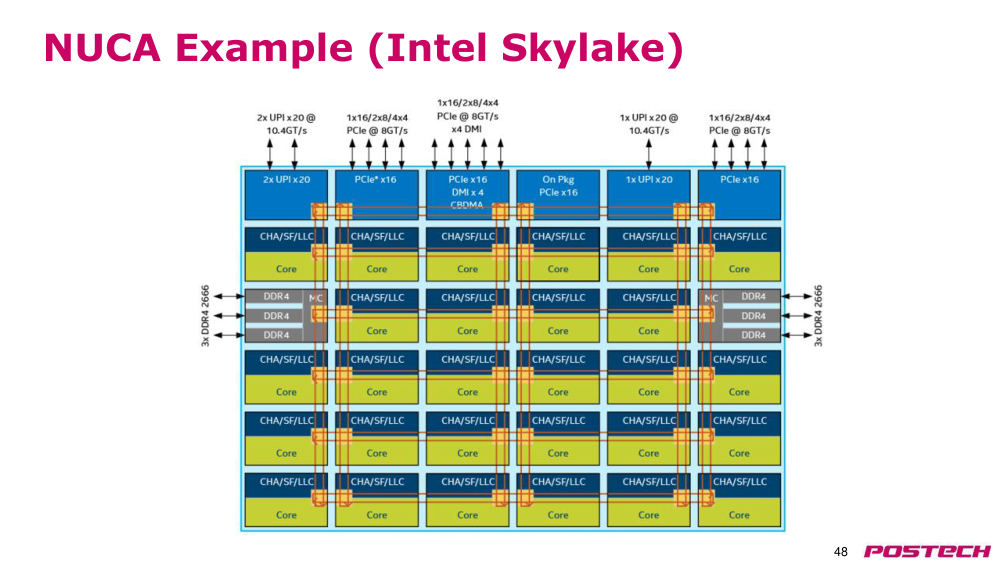
상황·문제실제 processor 는 NUCA 를 어떻게 구현하는가
원인core 마다 L3 slice 가 붙어 있고 on-chip network 거리만큼 latency 차이
해결실제 설계는 static mapping — line 위치가 address 로 정해지며, 먼 slice 는 request·response 가 멀리 오가 latency 가 가장 김
- mesh 상 CHA/SF/LLC + core 타일
2.517:55–20:21Shared cache 의 장단점
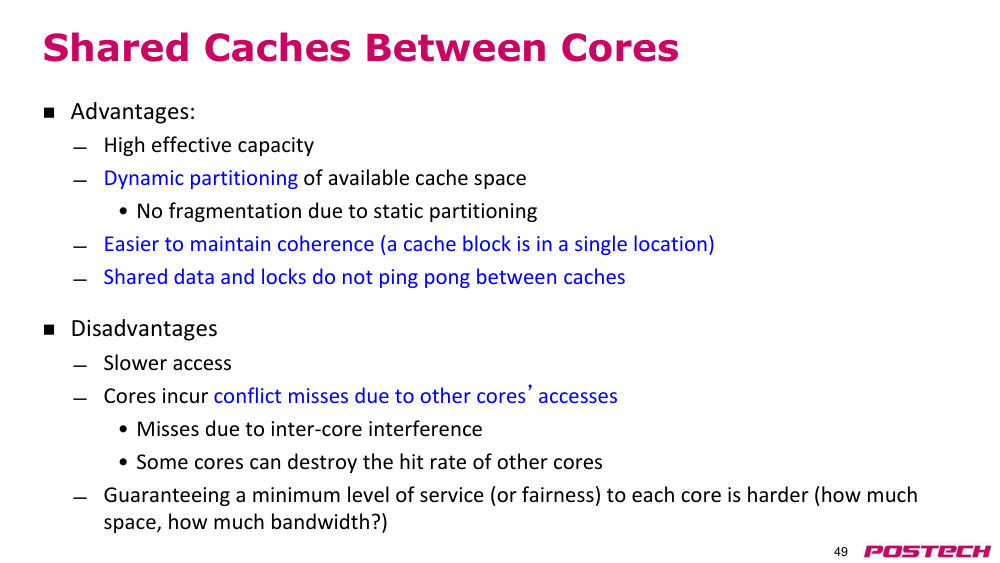
상황·문제shared cache 를 택할 때 얻는 것과 잃는 것
원인중복이 없고 한 위치에만 block 이 있지만, 여러 core 가 같은 용량을 두고 경쟁
해결장점: 높은 유효 용량, dynamic partitioning, coherence 쉬움, 공유 data·lock ping-pong 없음. 단점: 느린 접근, inter-core conflict miss, 성능 예측 어려움
- private 에서는 true/false sharing 으로 line 이 cache 간 이동하지만 shared 에선 없음
- core 성능이 다른 core 행동에 의존
2.620:21–23:23Shared cache 공간을 어떻게 나눌 것인가
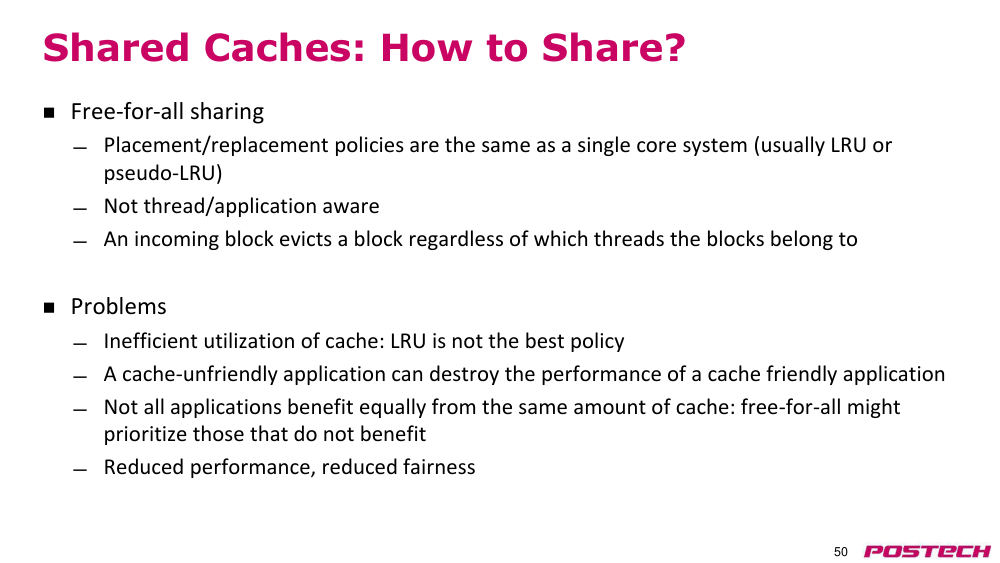
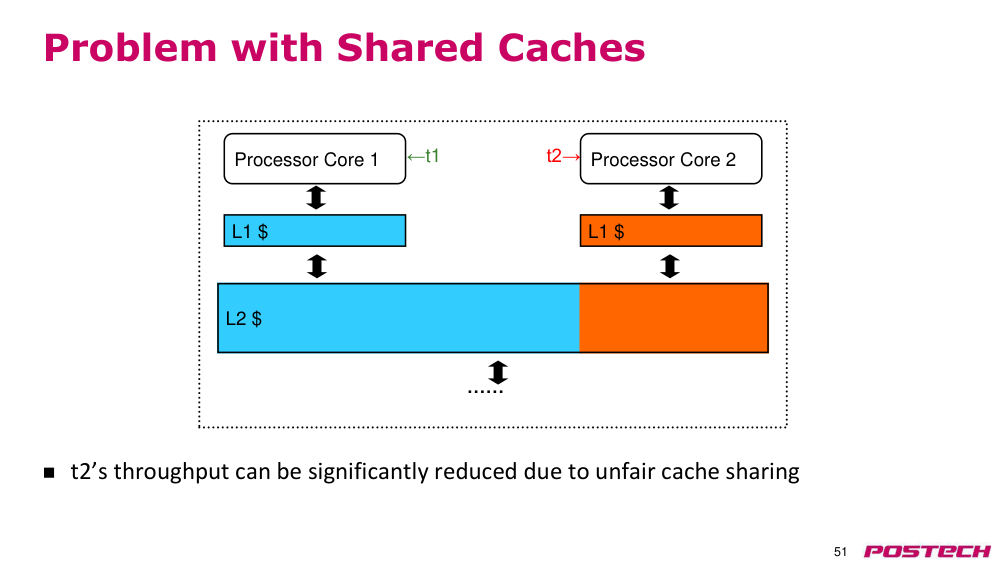
상황·문제LRU 등 단일 core 정책을 그대로 쓰는 free-for-all sharing 의 문제
원인thread 를 구분하지 않아 cache 를 thrash 하는 core 가 다른 core 성능을 크게 떨어뜨리고, 추가 용량의 이득도 app 마다 다름
해결많은 CMP 가 cache partitioning 으로 core 별 공간을 제어, 전체 성능을 최대화하는 동적 할당 연구가 많다
- 예: core 1 이 L2 대부분 차지 → core 2(t2) 성능 저하
- 추천 독서 교재 5.1-5.4
2.6.r.1Hennessy & Patterson, Computer Architecture: A Quantitative Approach 6th ed. (Elsevier) ↗ · 추천 독서 교재 (ca_L13: 5.1-5.4, ca_L14: 2.4-2.7)
2.723:23–25:26Virtual memory 시작: bare machine 과 location-independent code
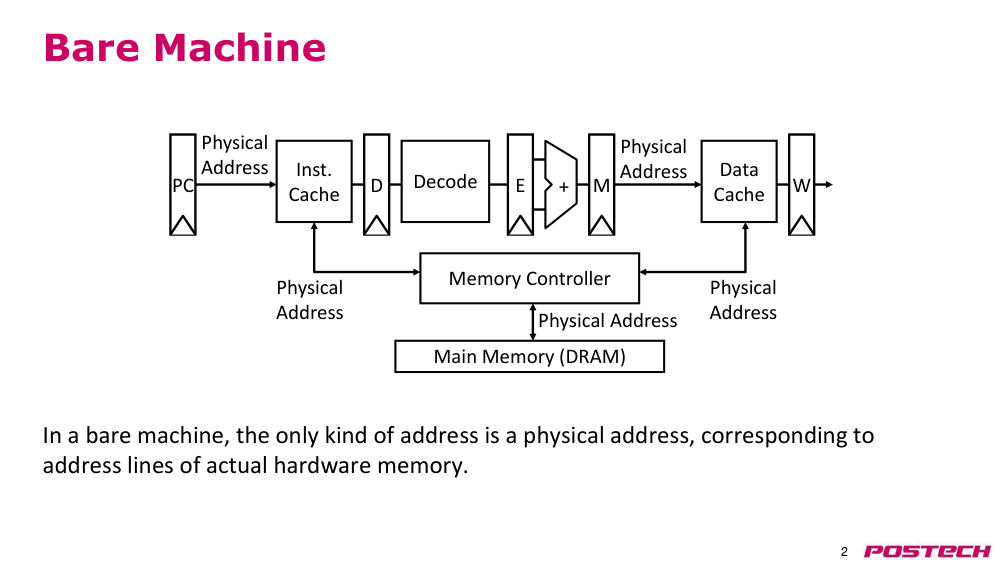
상황·문제address translation 이 없는 bare machine 에서는 physical address 만 존재
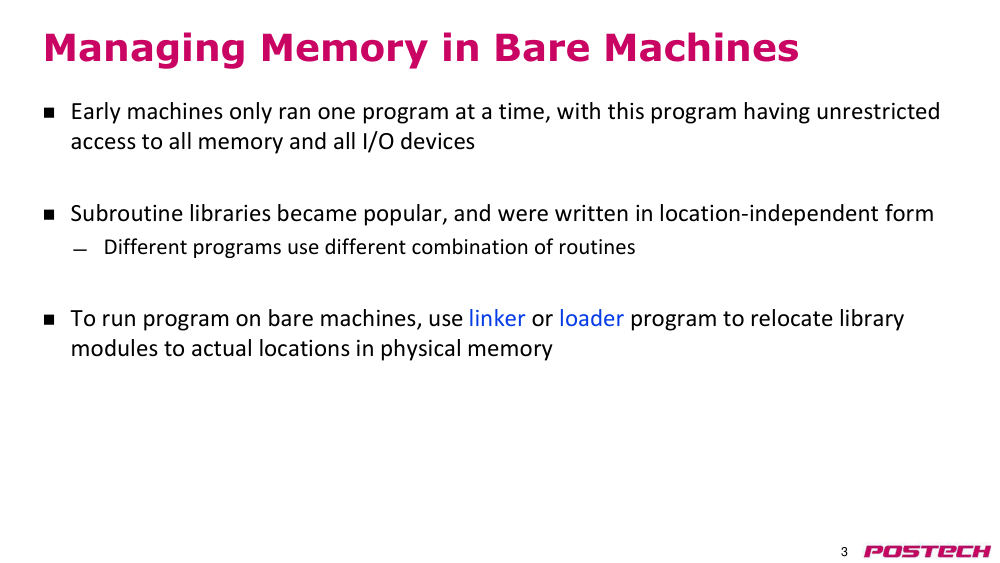
원인초기엔 한 번에 한 program 이라 문제없었으나, location-independent library 가 생기며 physical 위치 결정이 필요
해결linker·loader 가 library module 을 실제 physical 위치로 relocate
- 5-stage pipeline 에 translation 부품이 없음
- program 이 모든 memory·I/O 에 무제한 접근
2.7.r.1Wikipedia: Virtual memory ↗ · paging·demand paging·segmentation 역사, Atlas 가 최초의 virtual memory
2.825:26–28:50Dynamic address translation 과 base & bound
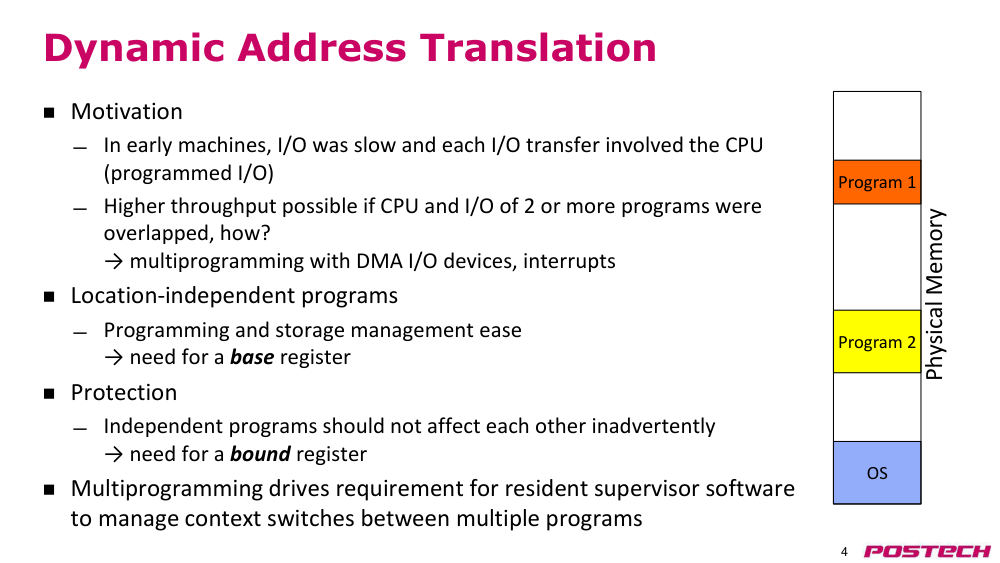
상황·문제느린 I/O 동안 CPU 가 놀지 않도록 여러 program 을 동시에 실행(multiprogramming)해야 한다
원인program 마다 physical 위치가 달라지고, 서로의 memory 를 침범하지 않아야 함
해결base register 로 logical→physical 변환, bound register 로 범위 검사. 두 register 는 supervisor mode(OS)만 변경 가능
- DMA engine·interrupt 와 함께 multiprogramming 확산
- OS 가 context switch 관리
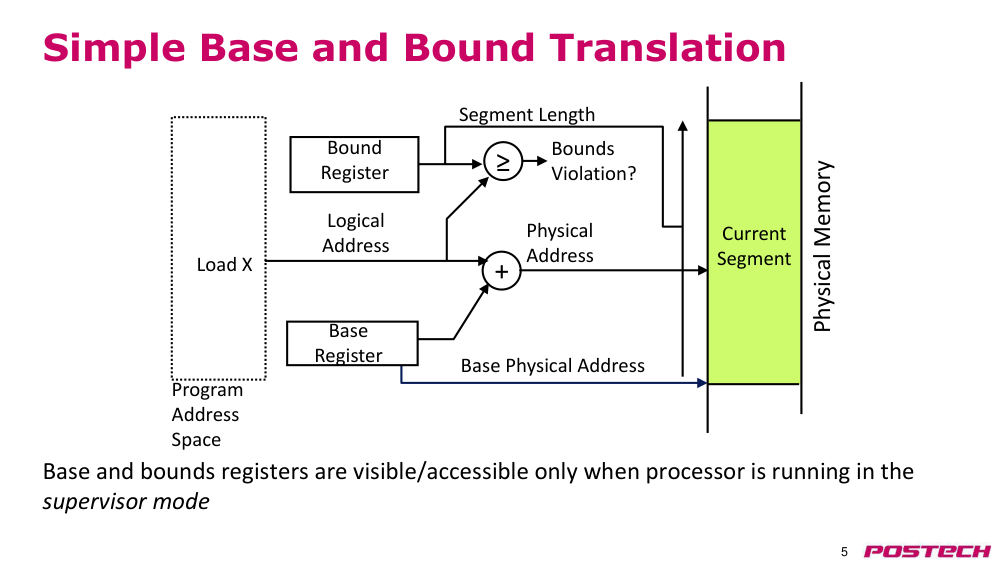
2.8.r.1Wikipedia: Base and bounds ↗ · OS 가 segment 의 physical 시작 주소를 base, 크기를 bound register 에 넣는 방식
2.928:50–36:25Code·data segment 분리와 base & bound pipeline
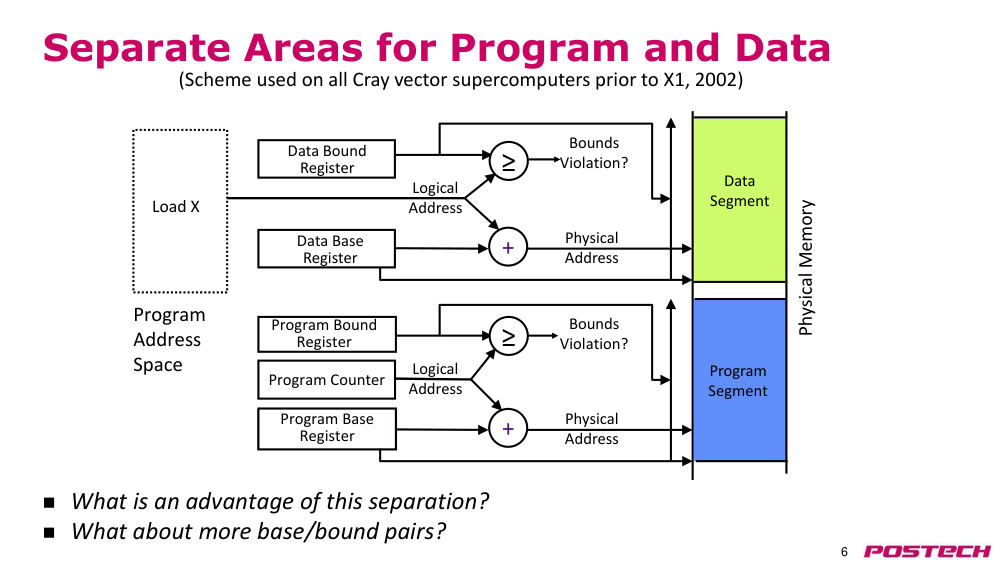
상황·문제segment 를 여러 개(code, data) 두면 무엇이 좋은가 (수업 중 질문)
원인single segment 로는 process 간 일부만 공유하는 것이 불가능
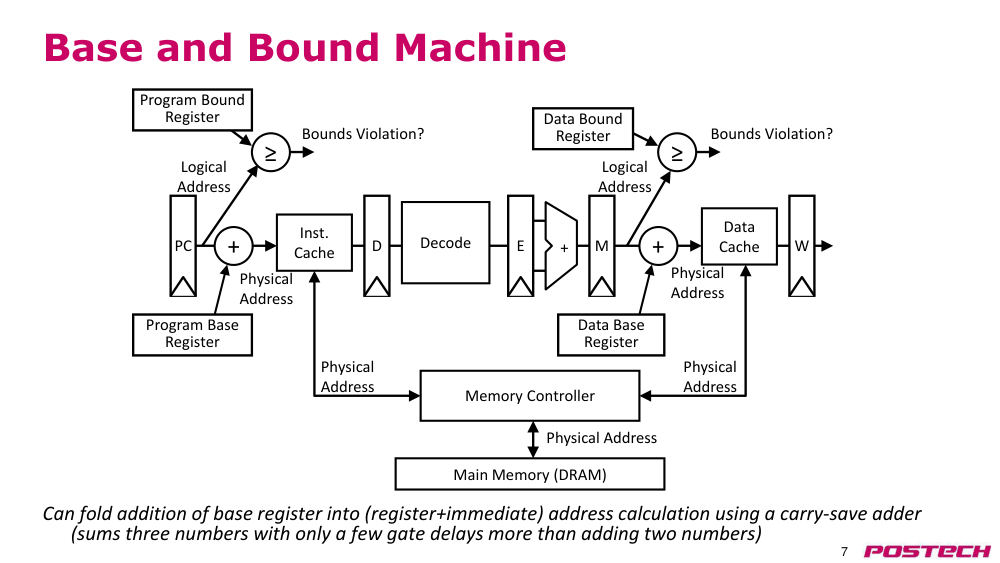
해결code segment 는 여러 process 가 공유, data segment 는 private. segment 를 더 두면 read-only 공유 등 다양한 공유. pipeline 에서는 address 계산에 base 를 더하는 세 수 덧셈을 carry-save adder 로
- Cray vector supercomputer(X1 이전)가 쓴 방식
- load 주소 = GPR(R4) + immediate + data base register
- carry-save adder 는 두 수 덧셈보다 latency 가 조금만 늘어남
2.1036:25–43:50External fragmentation 과 paging
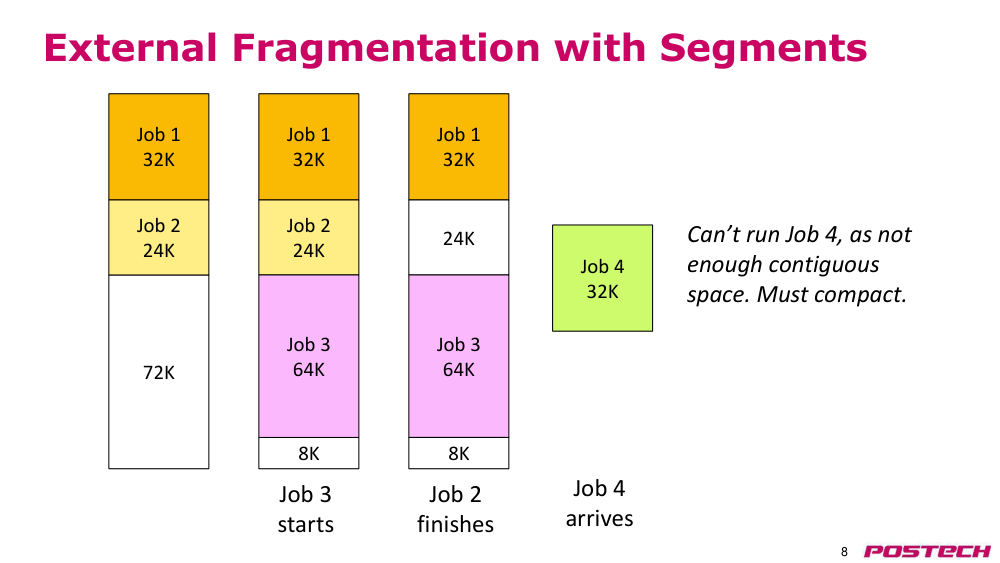
상황·문제Job 2 종료 후 빈 공간 합은 32K 인데 연속이 아니라 Job 4(32K)를 실행할 수 없다
원인base & bound 는 연속된 physical 영역을 요구 → external fragmentation, compaction 은 비쌈
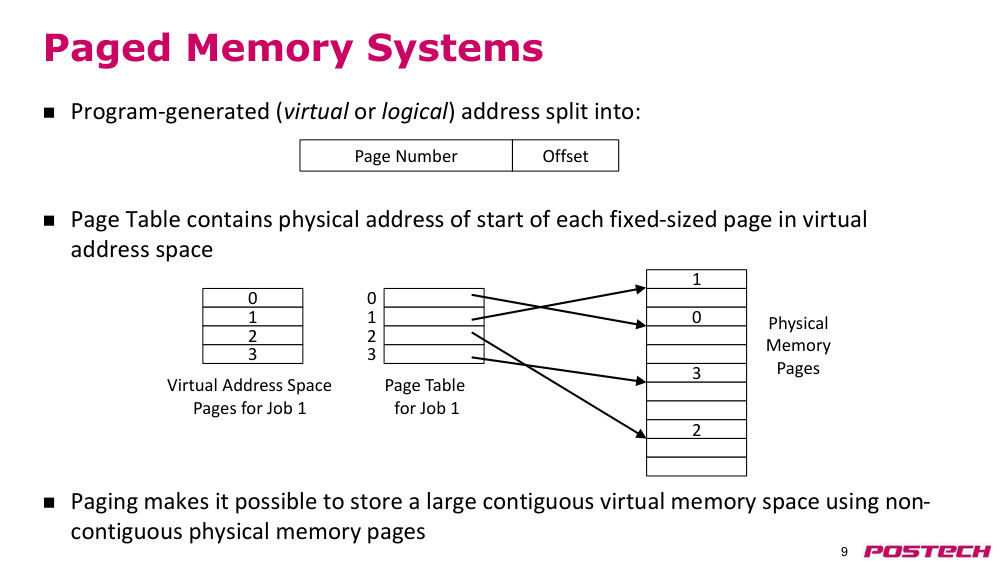
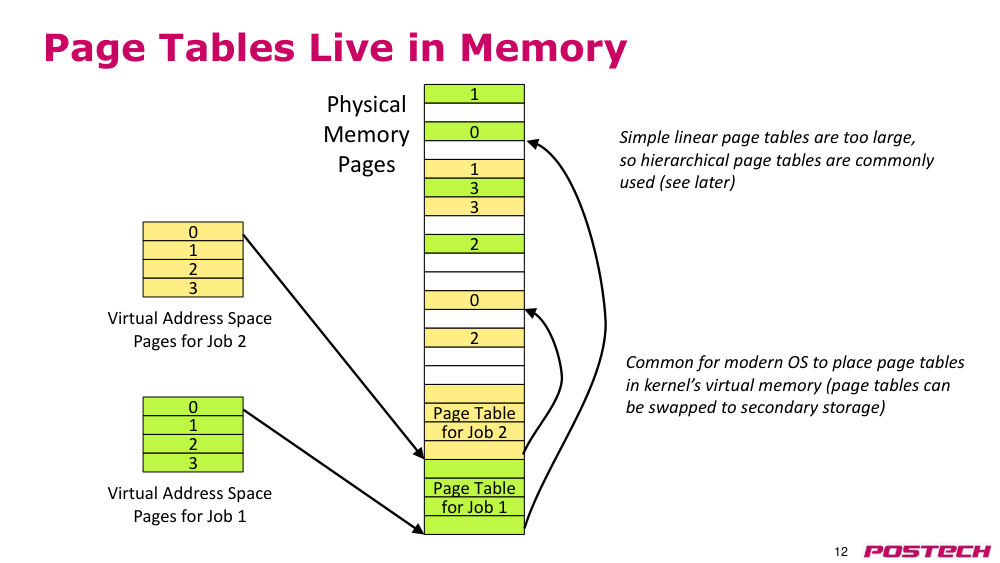
해결paging: address 를 page number + offset 으로 나누고 page table 로 불연속 page frame 에 mapping. OS free list 로 할당이 쉽고 사용량이 동적으로 증감
- 대가: internal fragmentation (4 byte 에도 4KB), 2MB·1GB page 로 가기 어려운 이유
- page table 은 DRAM 에 있어 translation 에 memory access 가 추가, multi-level 이면 더 많음 → TLB
- page table 은 OS 영역에 두고 secondary storage 로 swap 가능
2.10.r.2Wikipedia: Virtual memory ↗ · paging·demand paging·segmentation 역사, Atlas 가 최초의 virtual memory
2.1143:50–50:37제한된 primary memory: overlay 에서 Atlas demand paging 으로
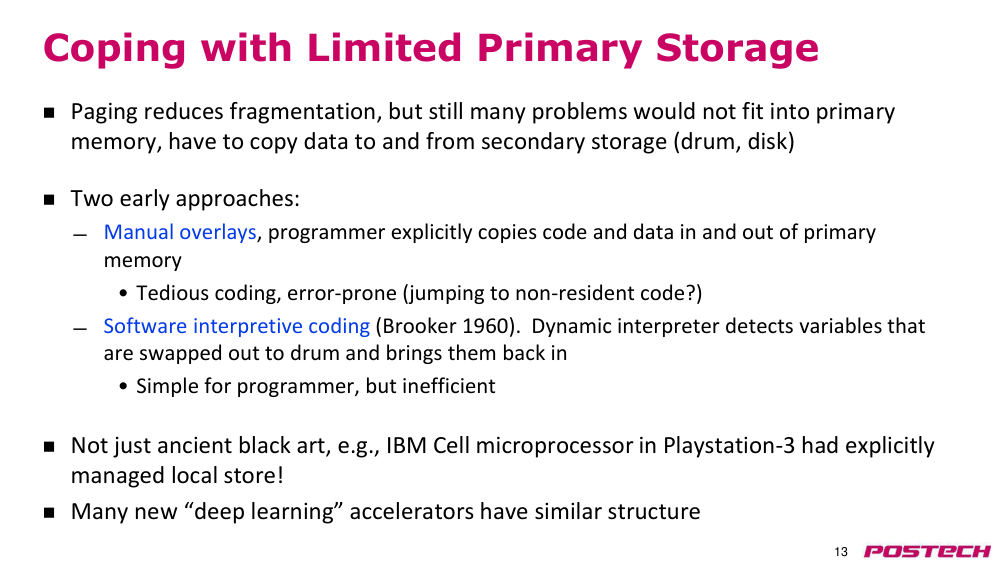
상황·문제paging 으로도 physical memory 보다 큰 문제는 drum·disk 와 data 를 오가야 한다
원인manual overlay 는 tedious·error-prone, software interpretive coding 은 쉽지만 비효율
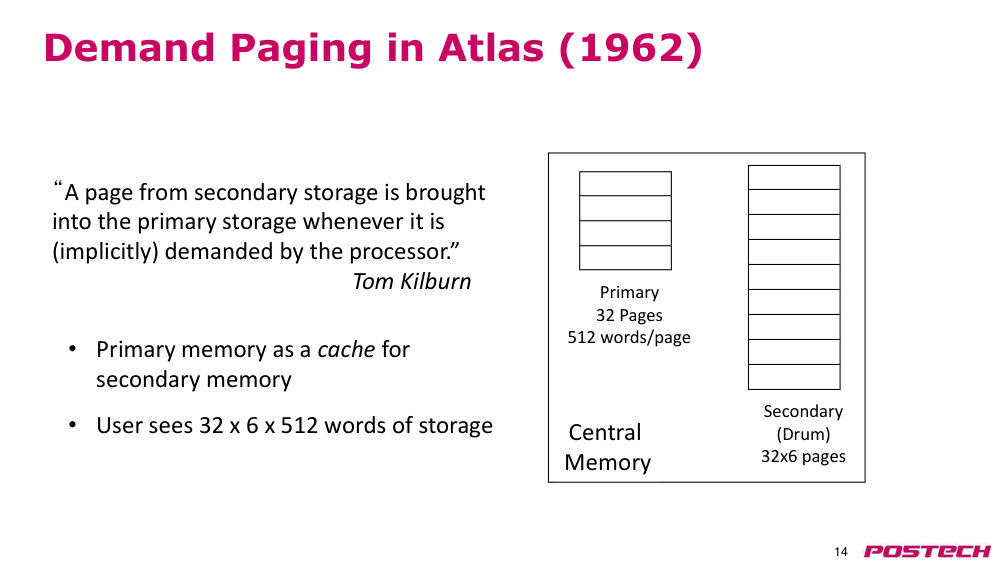
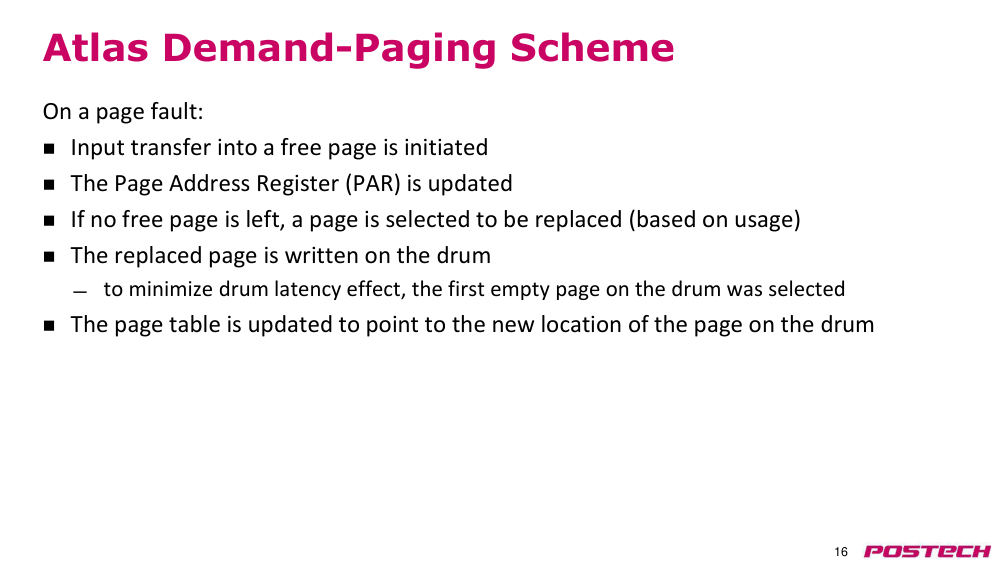
해결Atlas(1962) demand paging: primary memory 를 secondary(drum) 의 cache 로, 접근한 page 를 processor 가 자동으로 가져옴. PAR 32 개를 비교해 없으면 page fault
- primary 32 page×512 word, drum 32×6=192 page
- page fault: free page 로 전송, 없으면 사용량 기반(LRU 등) 교체 page 를 drum 에 쓰고 page table 갱신
- 명시적 local store 는 IBM Cell(PS3)·DL accelerator 에 여전히 존재
2.11.r.2Wikipedia: Atlas (computer) ↗ · 512-word page, drum store, page address register(associative memory) 로 구현한 virtual memory
2.1250:37–55:00Page table 크기와 hierarchical page table
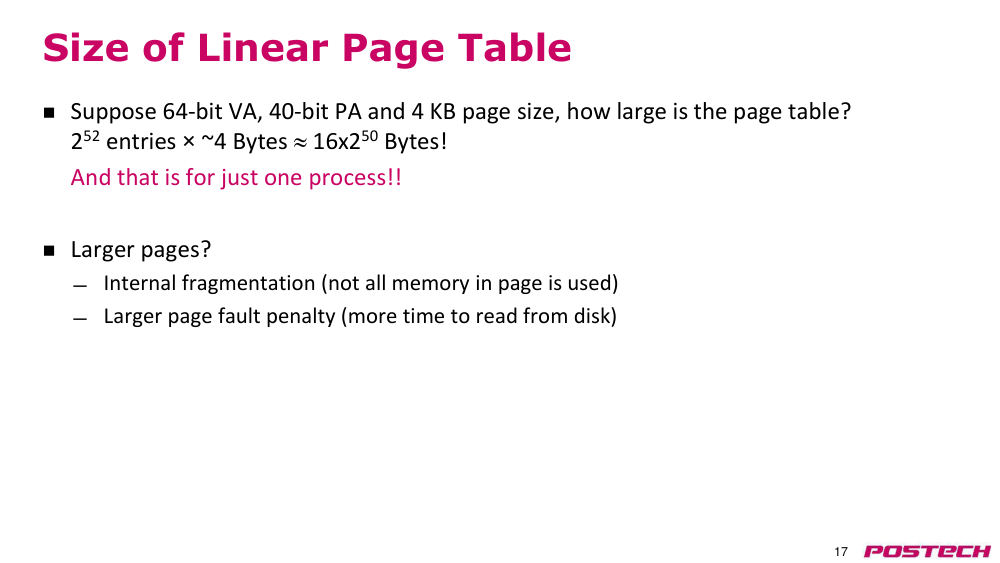
상황·문제linear page table 은 너무 크다: 64-bit VA, 40-bit PA, 4KB page 면 16×2^50 byte, 그것도 process 하나에
원인virtual address space 대부분은 실제로 쓰이지 않는데 모든 page 의 entry 를 둠. larger page 는 internal fragmentation·page fault penalty 증가
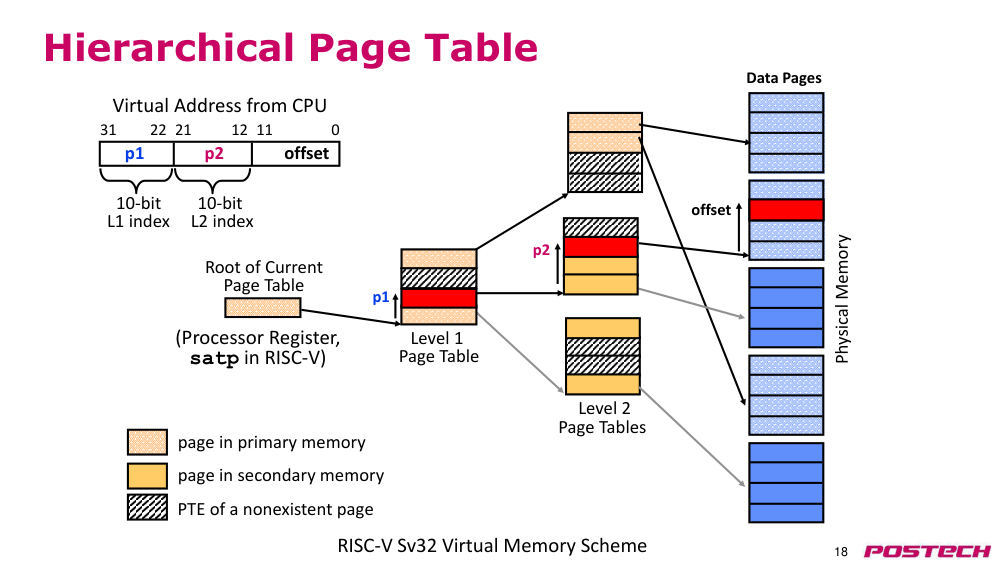
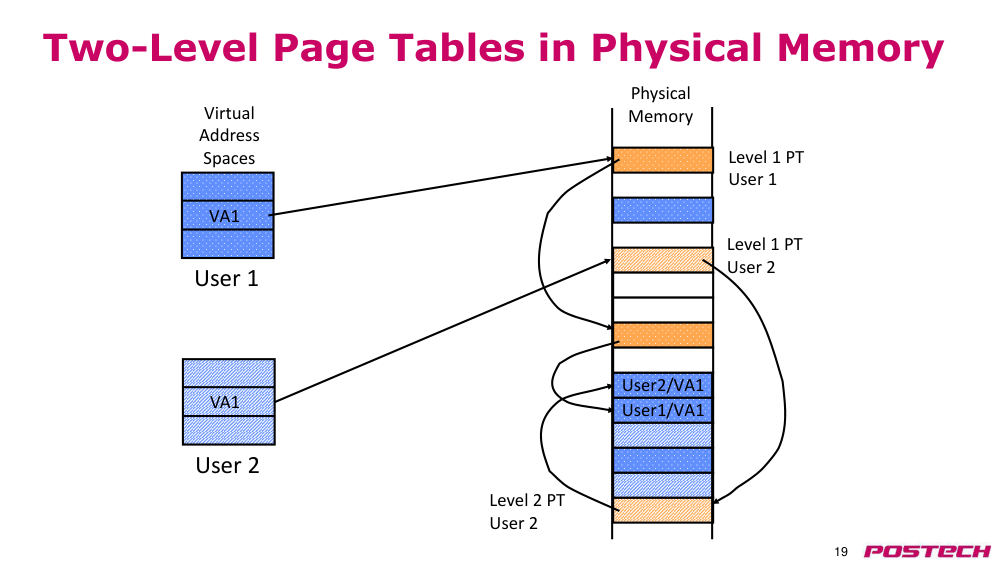
해결hierarchical page table: address bit 를 나눠 level 별 index (RISC-V Sv32 는 10+10 bit), 안 쓰는 영역의 하위 table 을 생략
- 대가: translation 에 level 수만큼 memory access (2-level 이면 이상적 대비 3 배)
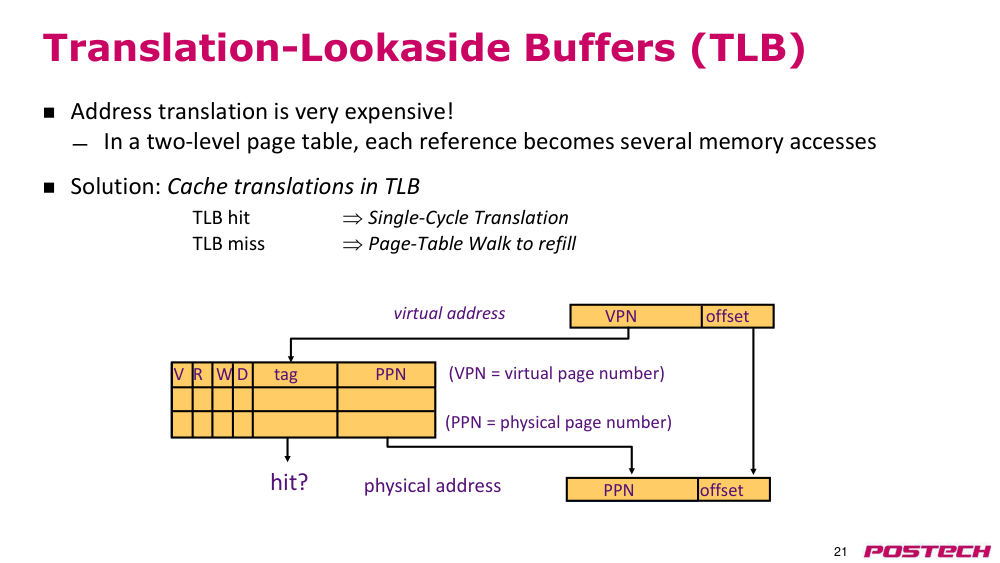
2.1355:00–1:01:44TLB: translation cache 설계와 miss 처리
상황·문제모든 memory access 마다 translation 과 protection check 가 필요하다
원인page walk 는 memory access 여러 번이라 최적화 없이는 매우 비쌈
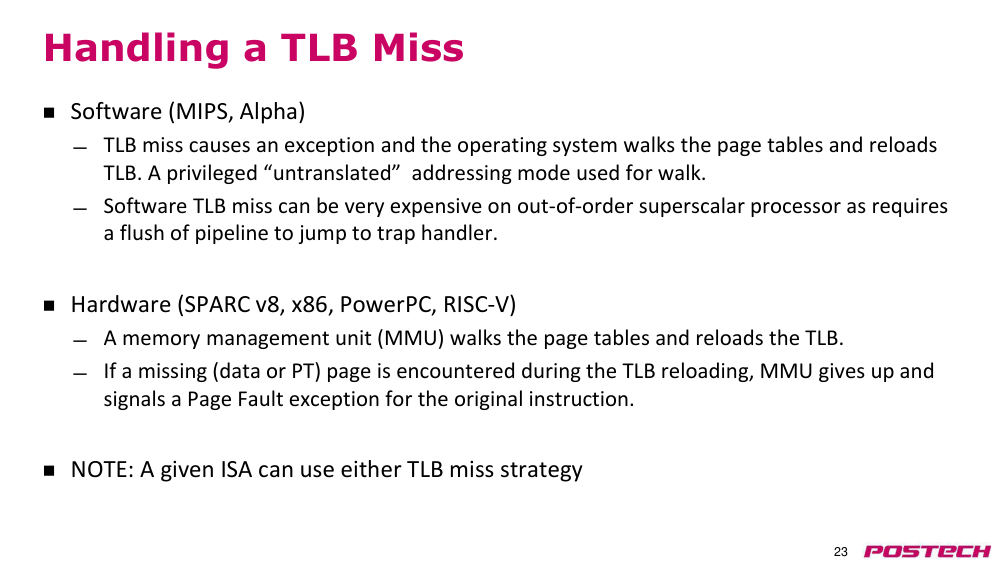
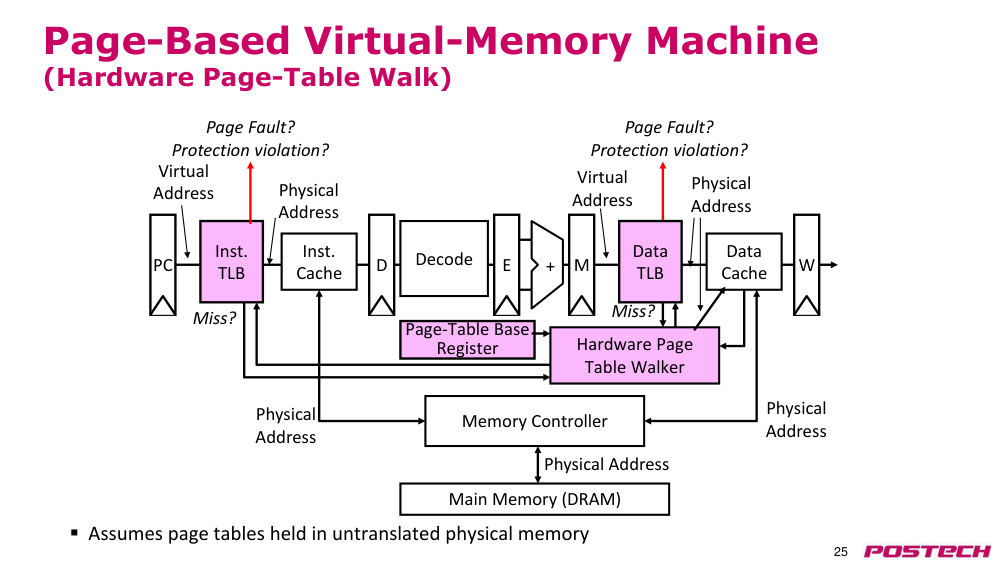
해결TLB 에 PTE 를 cache — hit 면 single cycle, miss 면 page walk. miss 처리는 hardware(MMU page walker) 또는 software(OS handler)
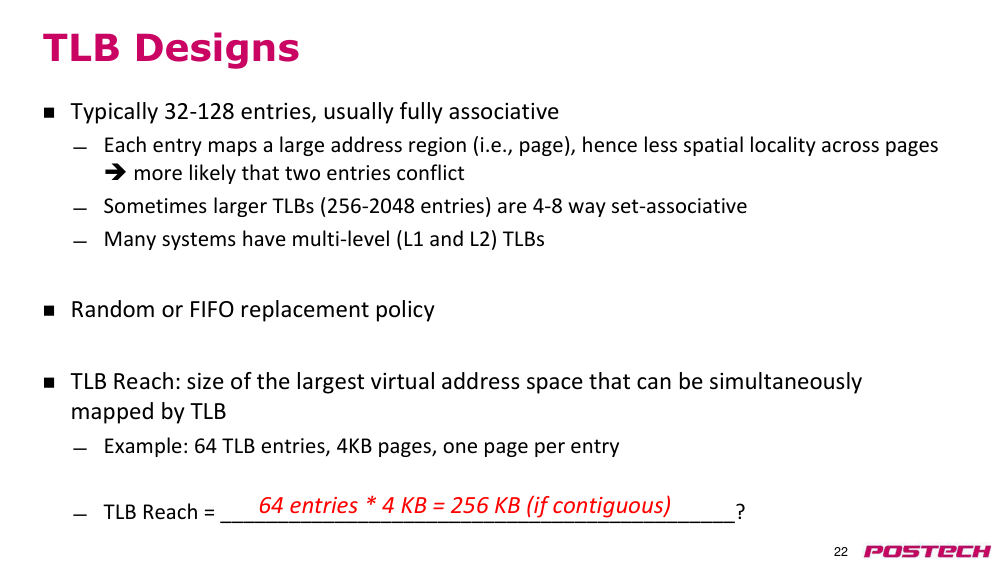
- TLB 32-128 entry, fully associative (page 간 spatial locality 낮음), L2 TLB 는 2,000 개 이상·set-associative
- TLB reach = entry 수 × page size (64×4KB)
- software handling 은 pipeline flush 로 비쌈, walk 중 page fault 가 없도록 untranslated addressing mode
2.13.r.1Wikipedia: Translation lookaside buffer ↗ · TLB 구조, hardware·software·firmware TLB miss handling
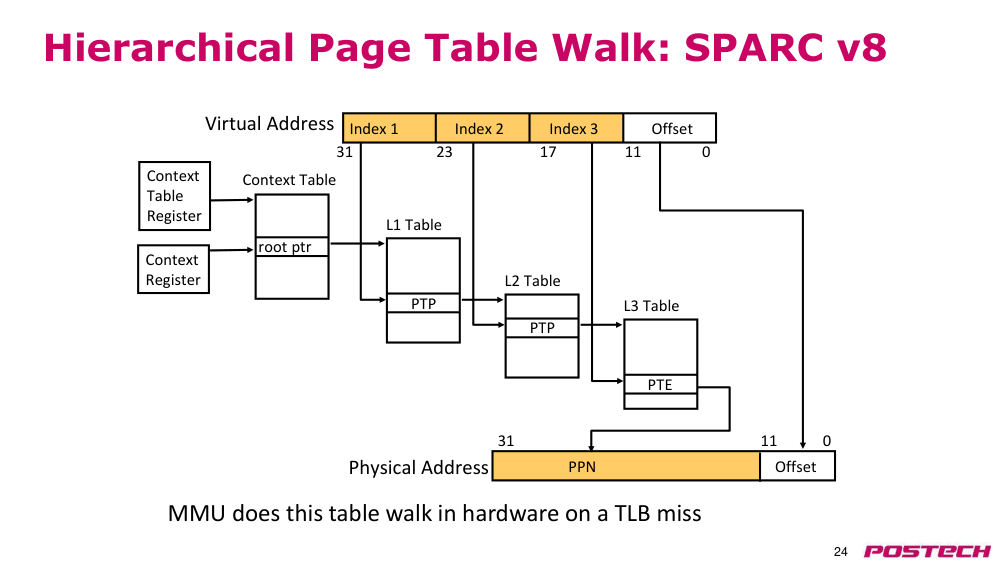
2.141:01:44–1:07:36Page walk 예(SPARC v8), pipeline 의 TLB, page fault·TLB shootdown
상황·문제TLB 와 page walk 를 pipeline·OS 와 어떻게 연결하는가
원인모든 cache 접근 전에 translation 이 필요하고, page fault 는 ms 단위로 매우 길다
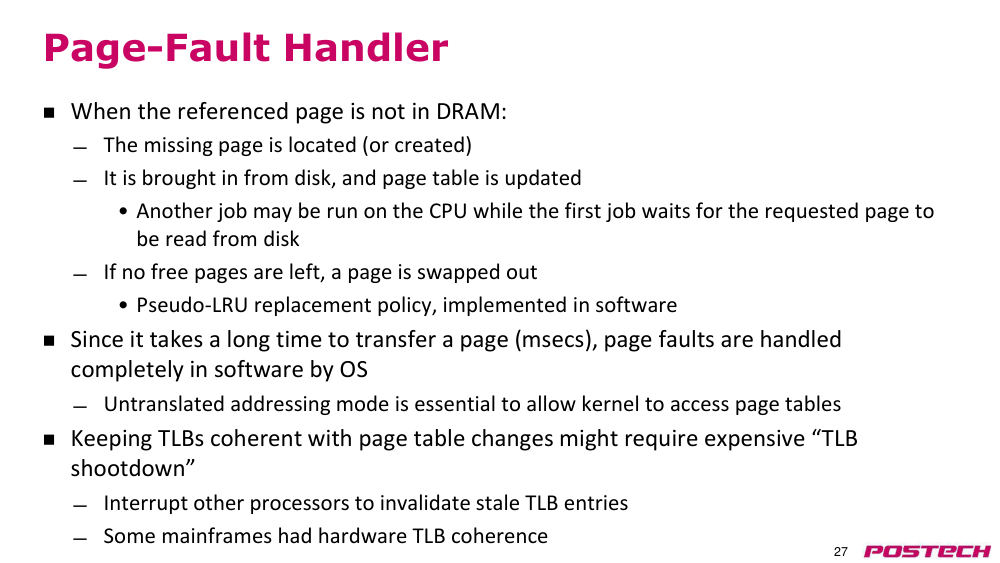
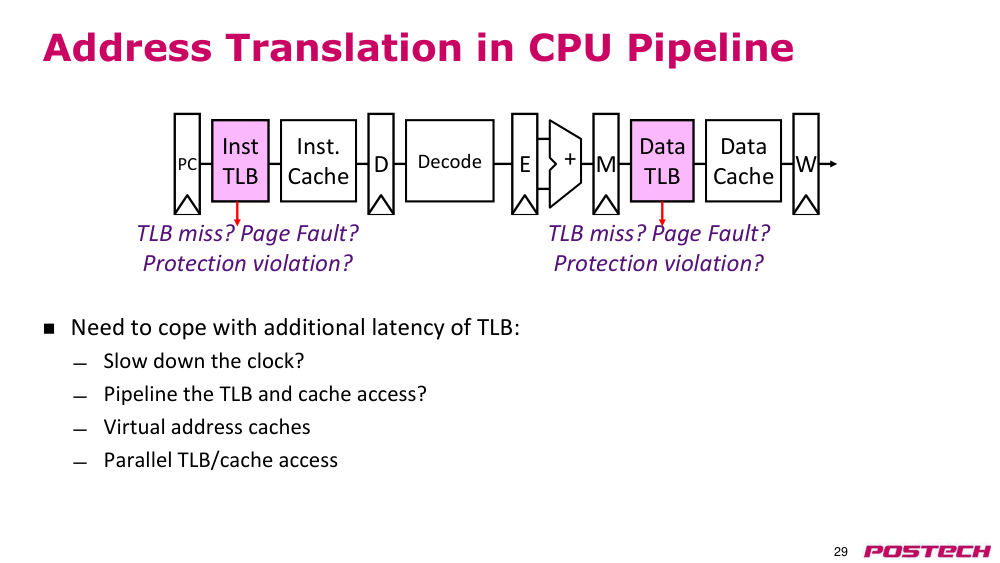
해결Inst/Data TLB 를 cache 앞에, miss 면 hardware walker. page fault 는 OS 가 untranslated mode 로 처리하며 그동안 다른 process 실행. restartable(precise) exception 필요
- SPARC v8: context table register·context register 로 root, 3-level table
- page table 변경 시 다른 core TLB 무효화 = TLB shootdown, TLB coherence 가 보통 없어 software 로 비쌈 (일부 mainframe 은 hardware)
- imprecise exception 은 OS 구현을 복잡하게, protection violation 은 abort
2.14.r.1Wikipedia: Translation lookaside buffer ↗ · TLB 구조, hardware·software·firmware TLB miss handling
2.151:07:36–1:17:00TLB latency 숨기기: virtual address cache 와 aliasing
상황·문제TLB access 가 cache access 앞에 더해져 latency 가 늘어난다
원인clock 을 늦추거나 TLB·cache 를 pipelining 하면 모두 성능 손해
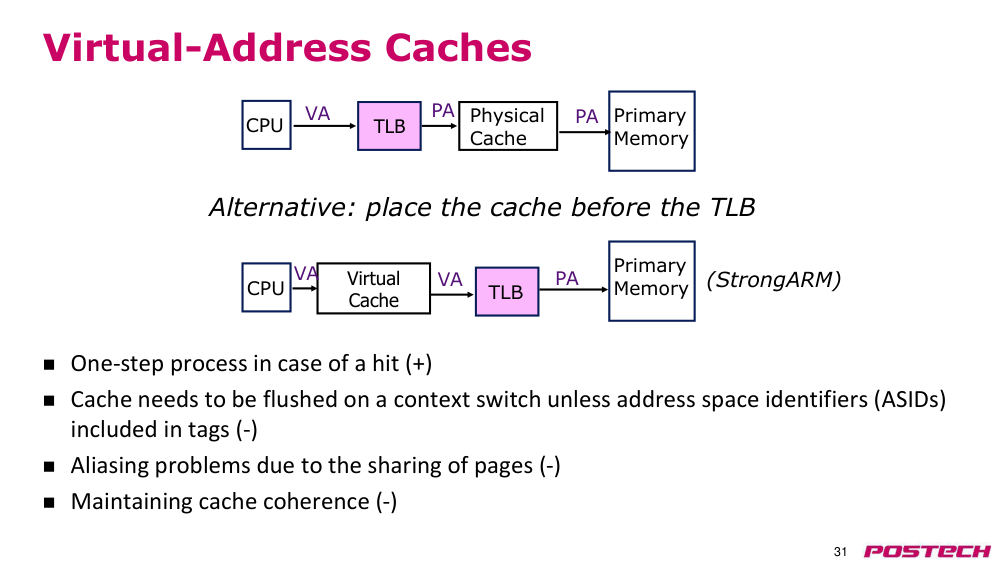
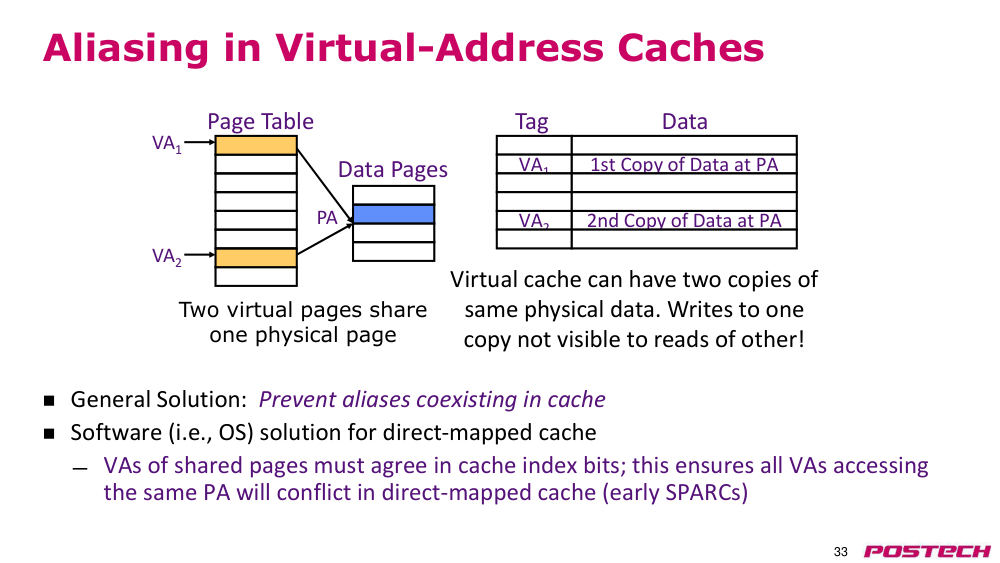
해결virtual address cache(VIVT, StrongARM): hit 면 translation 없음, miss 때만 TLB. 단점은 context switch flush(또는 ASID), aliasing, coherence. aliasing 은 OS 가 공유 page 의 cache index bit 를 맞춰 해결(early SPARC). 대안 VIPT 는 다음 강의
- paged VM 의 이점: protection·privacy, demand paging / 대가: 매 access translation
- aliasing: 같은 PA 에 대한 두 VA 가 cache 에 두 복사본, 한쪽 write 가 다른 쪽에 안 보임
- snoop 은 physical address 라 virtual cache 에선 역변환이 필요해 비현실적
3핵심 개념
3.1home / local / remote node
home 은 주소 담당 memory·directory, local 은 요청자, remote 는 복사본 보유 node
3.1.r.1Wikipedia: Directory-based cache coherence ↗ · cache line 마다 processor 별 bit vector(sharer set)를 두는 directory 형식
3.2private vs shared cache
private 는 core 별 L2 로 중복·coherence 필요, shared 는 중복 없으나 contention·긴 latency
3.3NUCA(non-uniform cache access)
큰 cache 를 bank 로 나눠 core 와의 거리마다 latency 를 다르게 둠
3.3.r.1Kim·Burger·Keckler, An Adaptive, Non-Uniform Cache Structure for Wire-Delay Dominated On-Chip Caches (ASPLOS 2002) ↗ · p47 에 인용된 NUCA 원 논문 (Utah 강의 사본, 1쪽 제목·학회 확인)
3.4free-for-all sharing
shared cache 에 thread 구분 없이 LRU·pseudo-LRU 를 그대로 적용, interference 발생
3.5base and bound register
physical = logical + base, bound 로 범위 검사, supervisor mode 에서만 변경
3.5.r.1Wikipedia: Base and bounds ↗ · OS 가 segment 의 physical 시작 주소를 base, 크기를 bound register 에 넣는 방식
3.6carry-save adder
세 수(register·immediate·base) 덧셈을 두 수 덧셈과 비슷한 delay 로
3.7external / internal fragmentation
external: 빈 공간이 불연속이라 할당 불가, internal: 고정 크기 page 안의 미사용 byte
3.8paging(페이징)
page number + offset, page table 로 불연속 physical frame 에 mapping
3.8.r.1Wikipedia: Virtual memory ↗ · paging·demand paging·segmentation 역사, Atlas 가 최초의 virtual memory
3.9demand paging(요구 페이징)
접근 시 page 가 없으면 page fault 로 secondary storage 에서 가져옴 (Atlas 1962)
3.9.r.2Wikipedia: Atlas (computer) ↗ · 512-word page, drum store, page address register(associative memory) 로 구현한 virtual memory
3.10PAR(page address register)
Atlas 의 page frame 당 1 개 register, 전부 비교해 없으면 page fault
3.10.r.1Wikipedia: Atlas (computer) ↗ · 512-word page, drum store, page address register(associative memory) 로 구현한 virtual memory
3.11hierarchical page table
level 별 index 로 쓰지 않는 영역의 table 생략, 대신 walk 에 memory access 여러 번
3.12TLB(translation lookaside buffer)
PTE 를 cache, hit 면 1 cycle translation, miss 면 page walk
3.12.r.1Wikipedia: Translation lookaside buffer ↗ · TLB 구조, hardware·software·firmware TLB miss handling
3.13TLB reach
TLB 가 동시에 mapping 하는 최대 virtual address 범위 = entry 수 × page size
3.14TLB shootdown
page table 변경 시 다른 core TLB 의 stale entry 를 무효화, 보통 software 라 비쌈
3.15VIVT / virtual address cache
virtual address 로 index·tag, miss 때만 translation — flush·aliasing·coherence 문제
3.16ASID(address space identifier)
cache line 에 process id 를 붙여 context switch flush 를 피함, tag overhead
3.17aliasing(synonym)
두 VA 가 같은 PA 를 가리켜 virtual cache 에 두 복사본이 생기는 문제
4스스로 확인
4.1directory protocol 에서 exclusive block 에 read miss 가 나면 home 은 왜 owner 에게 fetch 하는가?
답
home memory 에는 최신 data 가 없고 owner 만 가지고 있기 때문. owner 가 data 를 주고 memory 에 write back, 둘 다 sharer
4.2shared LLC 가 private 보다 유효 용량이 큰 이유와 대가는?
답
공유 line 이 중복되지 않기 때문. 대신 core 간 contention·interference 와 긴 latency
4.3NUCA 의 static mapping 과 dynamic mapping 차이는?
답
static 은 address bit 로 bank 결정(단순), dynamic 은 사용 core 가까이 배치해 latency↓ 하지만 검색·배치가 복잡
4.4base & bound 방식에서 Job 4 를 실행할 수 없던 이유는?
답
빈 공간 합은 32K 지만 연속이 아니라서 (external fragmentation), compaction 은 비쌈
4.5code·data segment 를 분리하면 얻는 이점은?
답
code segment 를 여러 process 가 공유하고 data segment 는 private 로 둘 수 있다
4.664-bit VA, 40-bit PA, 4KB page 의 linear page table 크기는?
답
2^52 entry × ~4 byte ≈ 16×2^50 byte, process 하나당
4.7TLB 를 fully associative 로 만드는 이유는?
답
entry 하나가 page 전체를 mapping 해 page 간 spatial locality 가 낮아 conflict 가능성이 높기 때문
4.864 entry, 4KB page TLB 의 reach 는?
답
64 × 4KB = 256KB
4.9software TLB miss handling 이 out-of-order superscalar 에서 비싼 이유는?
답
trap handler 로 가기 위해 pipeline 을 flush 해야 하기 때문
4.10virtual address cache 의 세 가지 단점은?
답
context switch flush(또는 ASID tag), aliasing(같은 PA 의 두 복사본), coherence(snoop 은 physical address)
5참고 자료
5.1Hennessy & Patterson, Computer Architecture: A Quantitative Approach 6th ed. (Elsevier) ↗ · 추천 독서 교재 (ca_L13: 5.1-5.4, ca_L14: 2.4-2.7)
5.3Wikipedia: Directory-based cache coherence ↗ · cache line 마다 processor 별 bit vector(sharer set)를 두는 directory 형식
5.4Kim·Burger·Keckler, An Adaptive, Non-Uniform Cache Structure for Wire-Delay Dominated On-Chip Caches (ASPLOS 2002) ↗ · p47 에 인용된 NUCA 원 논문 (Utah 강의 사본, 1쪽 제목·학회 확인)